







On February 25–26, 2026, the fourth Forum of Future Technologies took place in Moscow, at the International Trade Centre. This leading industry event gathered leading scientists, representatives of high-tech businesses, and key government bodies, and was dedicated to the formation of the bioeconomy in Russia and the application of biotechnology in various industries.
The event took place in accordance with instructions from the President of the Russian Federation, Vladimir Vladimirovich Putin, and served as a starting point for a national project to ensure technological leadership in the “Bioeconomy” area.
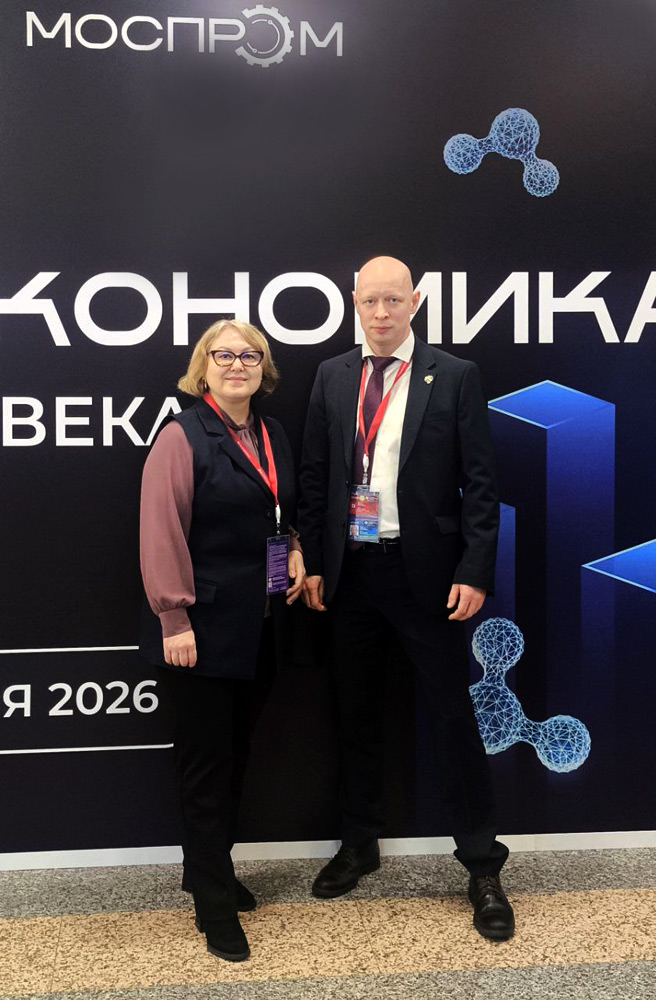
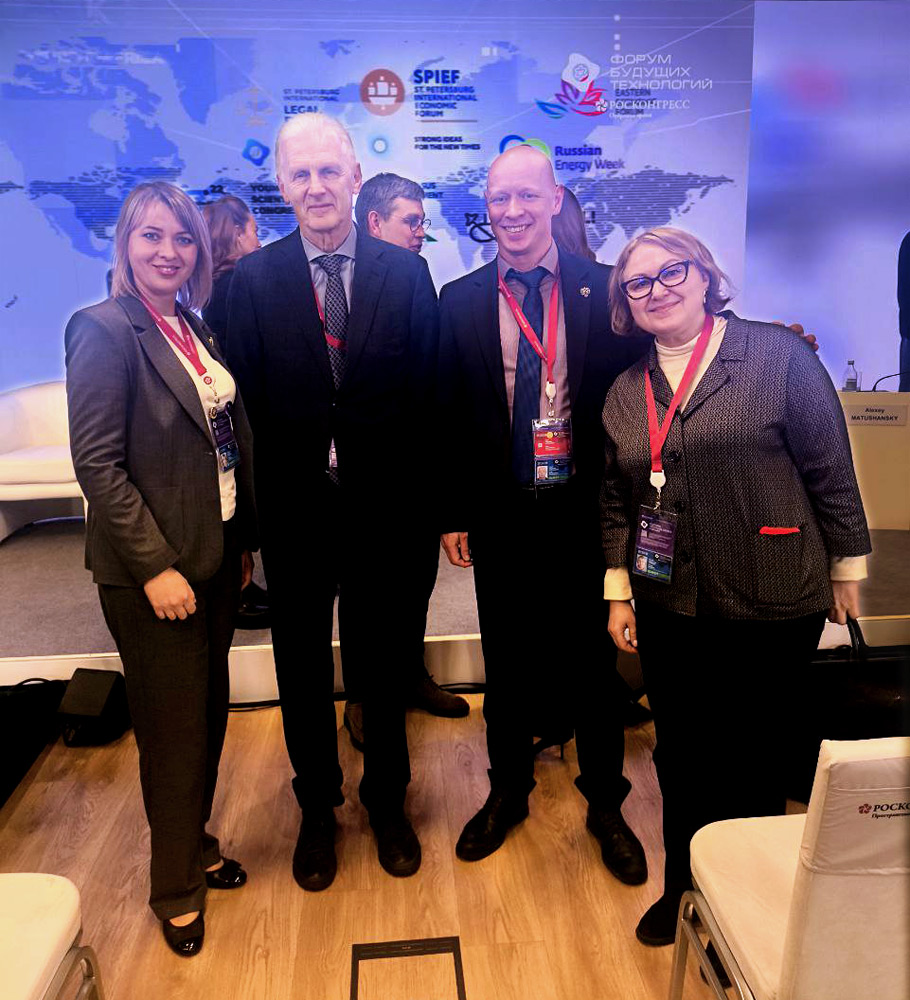
Representatives of FSBI “Saint-Petersburg Scientific Research Institute for Physical Culture” actively participated in the Forum, including Acting Director, Phd in Economics, Associate Professor Pavel Andreyevich Bulochnikov, and Head of the Department for Research of Socio-Economic Processes in Physical Culture and Sport, Phd in Economics, Associate Professor Tatyana Andreyevna Sorvina.
Thanks to the synthesis of cutting-edge technologies, sports science is becoming a full-fledged participant in bioeconomic processes. The transformation of the industry, the strengthening of the role of medicine, digitalisation, and the implementation of IT solutions are creating new opportunities for disease prevention, human capital development, and technological innovation. It is within this framework that the institute's representatives built a dialogue with forum participants.
On the opening day of the forum, delegates from FSBI SPbNIIFK participated in the session “Biotechnology for extending a healthy lifespan: trends, developments, and implementation”. Participants in the discussion explored methods for extending the period of active longevity and improving quality of life. Speakers agreed that biotechnology opens unprecedented opportunities to slow down biological aging and prevent age-related diseases. Representatives of the institute were particularly interested in the thesis that, in the foreseeable future, physical activity will become part of personalised medicine. It is already clear that there are no universal recipes for training and nutrition. Individual features of the genome, hormonal background, and metabolism require a unique approach. As session speakers noted, the development of molecular technologies, wearable sensors, and artificial intelligence will allow for predicting the body's reaction to stress and creating a “digital twin” of a person's physical condition.
In the context of these discussions, the research conducted at FSBI SPbNIIFK becomes particularly important. Research groups at the institute are already developing methods for assessing the body's functional reserves and models of adaptation of athletes to stress, which will form the basis for personalised training programs. The implementation of psychophysiological methods for assessing compatibility in team sports and the study of mechanisms for the body’s recovery from stress – all these are links in a chain leading to health management.
The second working platform for the delegates was the session “Science in the Spotlight: The Role of Publicity in the Life of Scientists.” Media representatives, cultural figures, and members of the scientific community sought to answer the question of how to effectively promote scientific achievements among the general public. Olga Petrova, Deputy Minister of Science and Higher Education of the Russian Federation, presented encouraging data: 74% of parents would like to see their children involved in science.
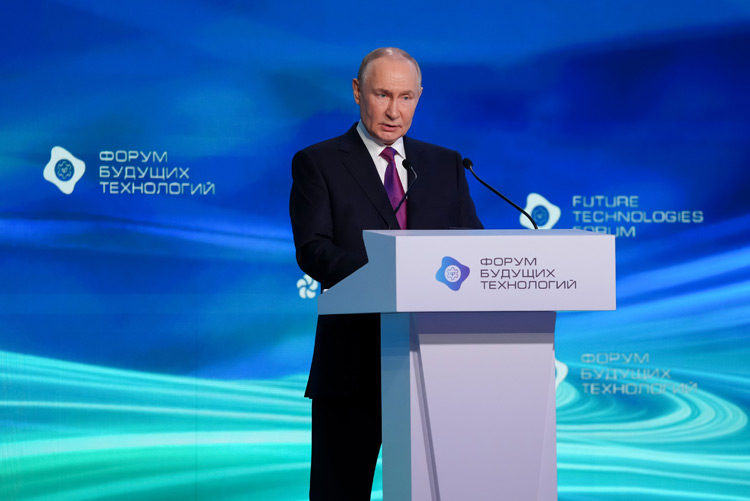
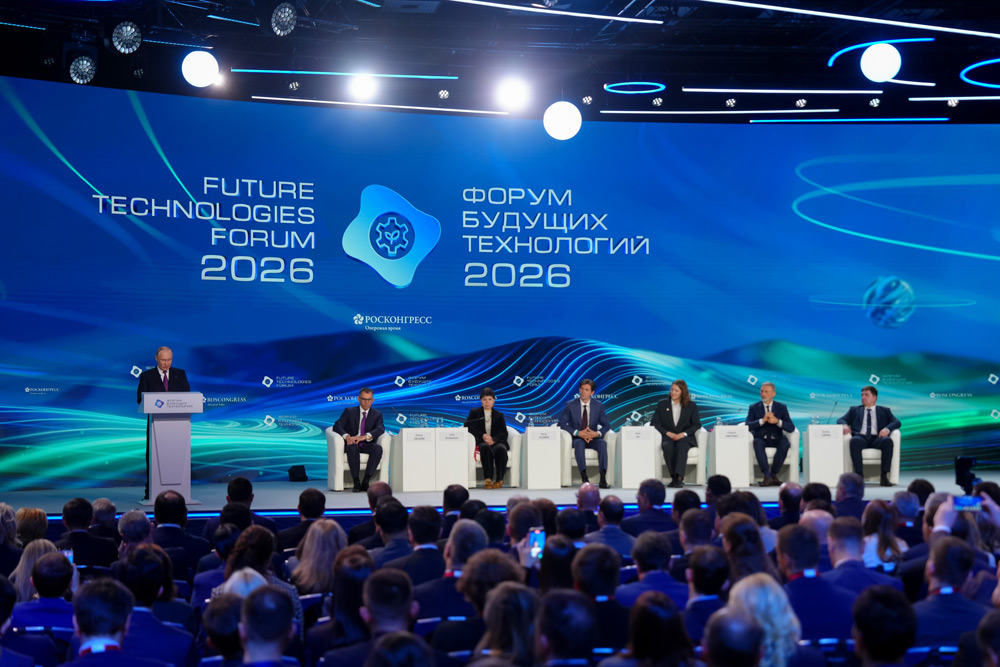
The culmination of the first day was a plenary session at which President of Russia Vladimir Putin welcomed the Forum participants. The Head of State emphasized the strategic importance of the bioeconomy for ensuring technological sovereignty and the quality of life for citizens.
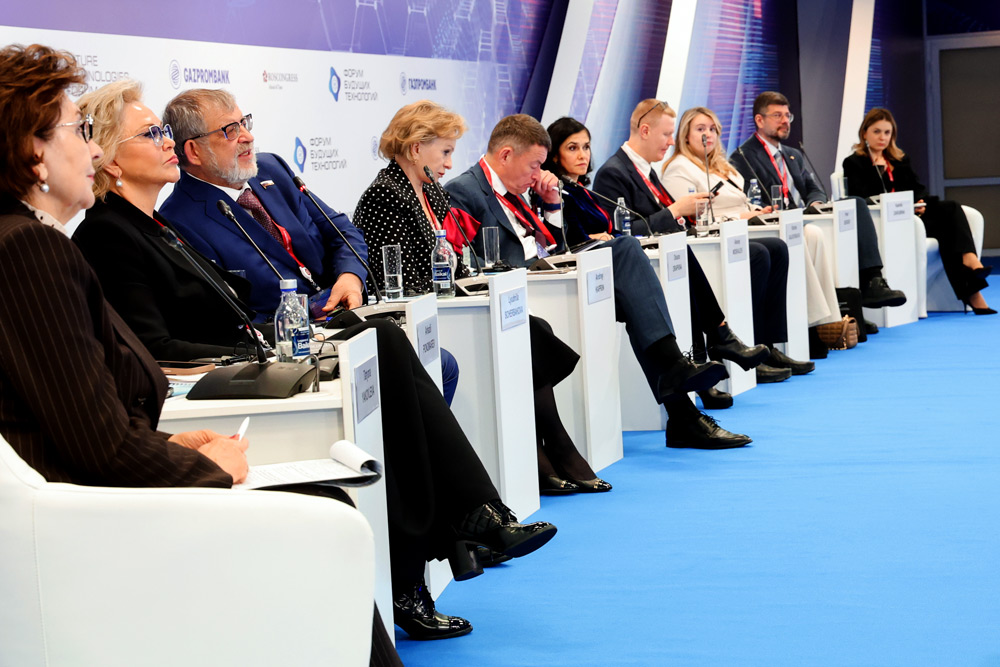
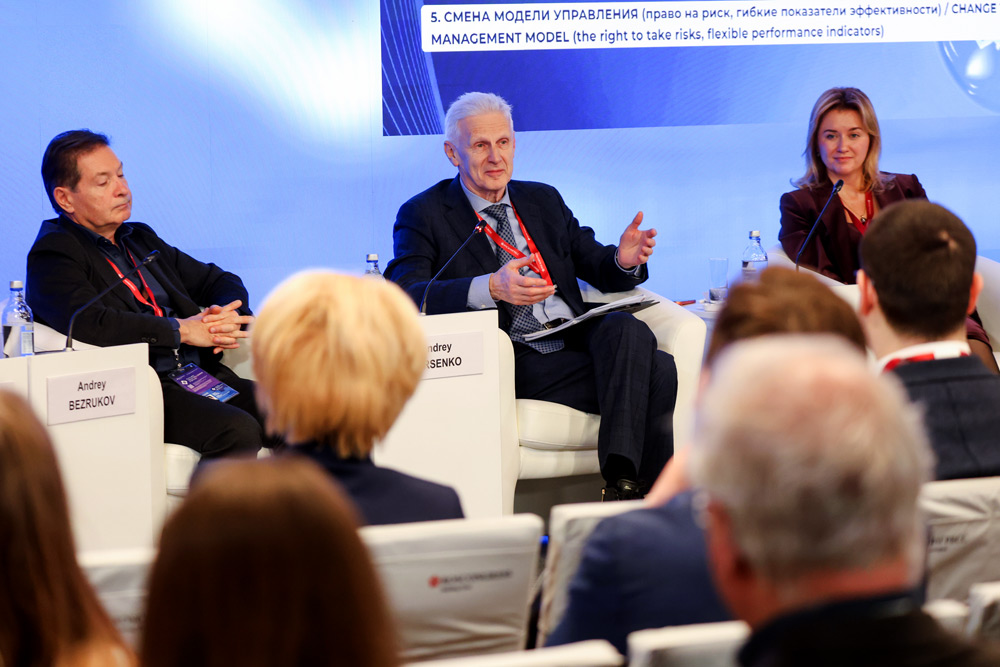
The second day of the Forum was no less eventful. Representatives of FSBI SPbNIIFK participated in the session “From Scenario Forecasting to Strategic Planning.” Director of FSBI SPbNIIFK, Phd in Economics, Associate Professor P.A. Bulochnikov, is the author of scientific works on the formation of an automated dynamic strategising mechanism in the Russian Federation, and the implementation of models to support managerial decision-making at regional and industry levels. The problem of implementing dynamic scenario analysis methods in the scientific and technological sphere and forming a unified architecture of verified data, independent of external sources, was discussed. The key task is to transition from scenario forecasting to practical strategies that define “development corridors” to ensure technological leadership, including through bioeconomy and platform ecosystems. Of particular importance is the creation of a coherent system of proactive goal-setting, efficient resource allocation, and prompt response to challenges, aimed at achieving specific, measurable results. As speakers noted, this approach will allow for the formation of a fundamentally new logic of interaction between the state, business, and society to achieve national goals of the country's socio-economic development, preventing a “locking in” to outdated trajectories.
Assistant to the President of the Russian Federation Andrey Aleksandrovich Fursenko, speaking at the session, raised the issue of the heterogeneity of science itself and approaches to its management. He emphasized that today it is important to distinguish between two vectors: science aimed at responding to major challenges and achieving global goals, and fundamental science, which, according to him, “is not amenable to foresight or prediction – it inherently contains uncertainty.”
Speaking about applied tasks, A.A. Fursenko noted the need to create a scenario forecasting system. He drew attention to the fact that current technology leadership programs are 99% focused on import substitution. In this case, according to the speaker, the task of the state is simplified and boils down to optimizing the path already taken by competitors and partners.
However, when moving towards fundamentally new developments, the situation changes. “Risks increase from the very beginning,” Fursenko explained, adding that it is here that a scenario approach is extremely important. It allows not only to assess the available resources but also admits the very possibility of error: the chosen direction may turn out to be incorrect, and then it will be necessary to promptly adjust the strategy.
The business program ended with a panel discussion “Biotechnology Equipment: Made in Russia,” which discussed the development of domestic bioreactors, analyzers, and systems for cell cultivation.
Participants in the Forum also became familiar with the advanced developments presented at the exhibition: from the first Russian portable sequencer “Nanoporous” to unique vaccines from FMBA and closed-cycle eco-settlements from “Tatneft” and “Rosatom”. The Ministry of Industry and Trade presented the first Russian portable device for reading genetic code “Nanoporous”, which can be used in medicine, ecology, and agriculture. The Kurchatov Institute presented a project of a bio-eco-settlement with a small-capacity nuclear power plant and a prototype of a carbon dioxide reactive utilization system for creating closed life support systems. The Russian Science Foundation showcased the world's only plant-based platform for the creation of antiviral vaccines. FMBA presented its developments in the field of vaccination, including the world's first gene-engineered vaccine against birch pollen allergy “Allergard” and a personalized vaccine for the treatment of colorectal cancer, as well as the results of the work of the “Center for Cybernetic Medicine and Neuroprosthetics.” Biotechnology solutions for the development of agriculture were presented by “Gazprombank.” The company “Tatneft” designed and created in Tatarstan an eco-settlement – the Aktubinsk settlement, where a closed-cycle principle – the transformation of waste into resources – has been implemented. The State Corporation “Rosatom” presented technologies for protecting the environment and restoring natural systems, as well as developments in the field of additive biotechnology.
Participation in the Forum of Future Technologies allowed the staff of FSBI SPbNIIFK not only to expand scientific connections but also to specifically consider the potential for the introduction of biotechnologies in the field of physical culture and sports. It is obvious that high-performance sports and mass physical culture are increasingly converging with medicine, genetics, and digital platforms. The Institute, at the forefront of these changes, is ready to offer the scientific community and practitioners new solutions based on a deep understanding of the processes occurring in the human body under the influence of physical activity.
Text prepared using materials from the official website of Roscongress